


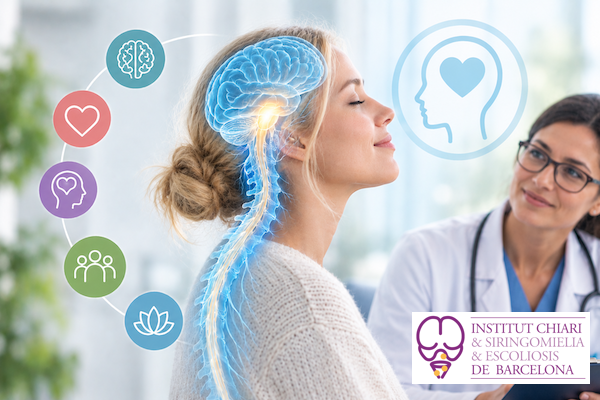
On World Mental Health Day 2026, we wish to highlight that mental health is a fundamental human right and that caring for it must be an integral part of comprehensive healthcare. This year’s theme, “Lived experiences heard: real voices, real change”, emphasizes the importance of meaningfully involving people in decisions that affect their health and care.
For individuals living with neurological and neurosurgical conditions, listening to their experiences is particularly important. Conditions such as Chiari I malformation, syringomyelia, scoliosis, and other conditions associated with Filum Disease can involve persistent symptoms and functional limitations that may have a profound impact on the psychological well-being.
Although these conditions are not, in themselves, classified as mental health disorders, their symptoms, progression, and overall burden can significantly affect patients’ quality of life, emotional well-being, and daily functioning. Living with chronic pain, fatigue, sleep disturbances, physical limitations, or uncertainty about one’s health can also have an emotional impact.
Filum Disease and Quality of life
The effects of a chronic neurological condition are not necessarily limited to its physical manifestations. Pain, functional limitations, sleep disturbances, fatigue, difficulties in performing certain activities, and a loss of autonomy can all influence a person’s perception of their health and quality of life.
For this reason, comprehensive patient care should consider not only neurological signs and symptoms but also the individual’s emotional, social, and personal circumstances.
In a scientific poster presented at the 5th International Webinar on Neuroscience and Psychiatry in December 2025, Dr. M. B. Royo Salvador et al. examined quality of life in patients with Filum Disease. The study reported mood disturbances, alterations in certain cognitive functions, and sexual dysfunction in a proportion of the patients evaluated.
You can read the full publication here: Quality of Life in Patients with Filum Disease
Mental health in patients with Arnold-Chiari I syndrome and Syringomyelia
Individuals with Chiari I malformation and syringomyelia may experience a lengthy diagnostic journey before the underlying cause of their symptoms is identified. During this period, the presence of nonspecific or difficult-to-explain neurological symptoms can contribute to uncertainty, anxiety, and frustration.
Some patients also report feeling that their symptoms were not fully recognized or were attributed primarily to psychological factors prior to receiving a diagnosis through appropriate diagnostic tests, such as magnetic resonance imaging.
Therefore, listening carefully to the patient and assessing their symptoms comprehensively are essential. An appropriate differential diagnosis can help clinicians consider neurological, psychological, and other potential causes or contributing factors. Acknowledging and validating a patient’s experience is therefore an important part of person-centered care.
The importance of comprehensive care
Physical and mental health are closely interconnected. When a neurological condition affects mobility, causes persistent pain, disrupts sleep, or limits autonomy, it can impact a person’s emotional state and social relationships.
For this reason, the care of patients with Filum Disease, Arnold-Chiari I Syndrome, syringomyelia, and scoliosis must address—where appropriate—not only neurological and functional aspects but also emotional, cognitive, and social ones.
The Filum System® is based on a personalized medical care approach, that takes into account each patient’s clinical characteristics and the impact the disease may have on various areas of their life.
Psychological support and measures aimed at fostering emotional well-being can be key elements in the comprehensive management of a chronic condition. Early intervention can help patients better cope with the limitations associated with the disease, foster a more accurate perception of their health status, and help preserve their quality of life.
Caring for mental health is also caring for health
On World Mental Health Day 2026, we are reminded of the importance of paying attention to all dimensions of health.
Caring for mental health also means listening to our needs, seeking help when necessary, and relying on healthcare professionals when illness affects our physical or emotional well-being.
The 2026 theme, “Lived experiences heard: real voices, real change” highlights that listening should go beyond simply hearing patients’ stories. Meaningful engagement means giving people with lived experience a role in shaping the care, services, and decisions that affect them.
For patients living with neurological conditions, being heard, understood, and treated as a whole person is an important part of comprehensive, respectful, and person-centered care.